
November Lawn Tips
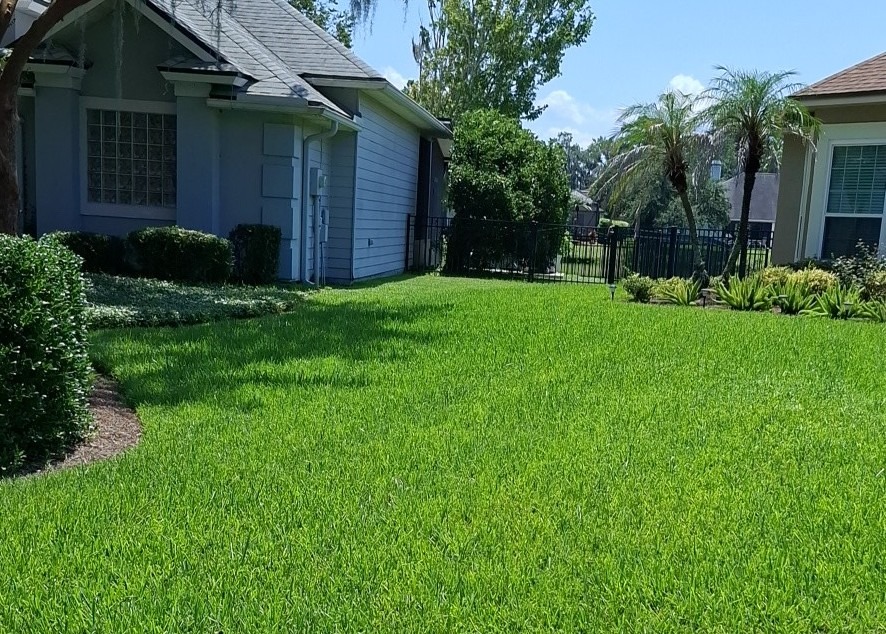
November is when Jacksonville and Northeast Florida lawns begin behaving less like summer turf. Warm-season grass may remain green, but growth slows sharply and some lawns begin moving toward dormancy. This month is about protecting turf rather than pushing growth: reduce unnecessary nitrogen, adjust irrigation, watch closely for large patch, manage winter weeds at the right stage, and prepare the lawn for the first cold snaps.
1. Let Warm-Season Turf Slow Down Naturally
By November, St. Augustinegrass, zoysiagrass, bermudagrass, bahiagrass, and other warm-season turf types in North Florida are responding to shorter days and cooler nights. Growth slows considerably, and some lawns may begin losing color as they move toward winter dormancy. That change is normal and does not automatically mean the lawn is unhealthy.
The biggest mistake this time of year is trying to force summer growth back into the lawn with unnecessary nitrogen. As turf growth declines, its nutrient demand also declines. A November lawn should be managed for resilience and root health rather than rapid top growth.
- Do not fertilize simply because the lawn is becoming lighter in color.
- Avoid heavy nitrogen applications to turf that is slowing down or beginning dormancy.
- Base any late-season treatment on the grass species, lawn condition, previous applications, and current local rules.
- Do not apply fertilizer before heavy rain or to stressed turf.
A gradual change from deep summer green to a lighter green or tan appearance can be part of the normal seasonal cycle for warm-season grass in Northeast Florida.
2. November Is Prime Time to Watch for Large Patch
Large patch becomes an especially important lawn disease to watch as cooler weather arrives. UF/IFAS notes that large patch is commonly seen from November through May, particularly in St. Augustinegrass and zoysiagrass. Cool temperatures combined with prolonged moisture create favorable conditions for the disease.
Large patch may begin as yellow, orange, or brown areas that expand into irregular or circular patches. Because drought stress, insects, nutrient problems, and other diseases can create similar symptoms, correct identification matters before treatment.
- Water early in the day so grass blades do not stay wet overnight.
- Avoid excessive irrigation and late-season nitrogen.
- Do not repeatedly water a discolored patch assuming it is dry.
- Have spreading or recurring patches evaluated before applying a fungicide or other pesticide.
November is a good month to catch disease pressure early, before a small problem expands during the cooler season.
3. Reset Irrigation for Cooler, Drier Conditions
A lawn that needed regular summer irrigation may need far less water in November. Cooler temperatures, shorter days, and slower turf growth reduce water use. Leaving an irrigation controller on a summer schedule can keep the soil unnecessarily wet and increase disease pressure.
Water established turf based on visible signs of stress rather than the calendar. Folding leaf blades, a blue-gray color, or footprints that remain visible after walking across the lawn are common signs that irrigation may be needed. When watering is necessary, apply enough water to reach the root zone instead of using frequent shallow cycles.
Important for Jacksonville homeowners: At the time this November 2026 post is being published, Jacksonville is under a Phase III Water Shortage. Landscape irrigation is limited to one day per week and is prohibited between 8 a.m. and 6 p.m. Because restrictions can change, homeowners should always verify the current City of Jacksonville and St. Johns River Water Management District rules before irrigating.
4. Shift Winter Weed Control From Prevention to Monitoring
October is often the key pre-emergent timing window for many winter annual weeds in North Florida, because treatments work best before seeds germinate. By November, the strategy begins to shift. Some winter weeds may already be emerging, while lawns that received an earlier pre-emergent treatment need to be monitored for breakthrough weeds and treatment timing.
UF/IFAS guidance notes that winter annual weed pre-emergent timing in North Florida is generally triggered when nighttime temperatures fall into the 55°F to 60°F range for several consecutive days. Depending on the product label and the original treatment date, a follow-up application may sometimes be needed several weeks after the first treatment.
- Identify weeds before choosing a treatment.
- Treat young, actively growing weeds before they become established when an appropriate post-emergent product is needed.
- Use only herbicides labeled for the specific turf species and target weed.
- Do not assume every green plant in a slowing lawn should be treated the same way.
A healthy lawn and correct mowing and irrigation practices remain important parts of long-term weed control, even when turf growth is slowing.
5. Mow Less Often, but Do Not Scalp the Lawn
Mowing frequency should follow growth. As warm-season turf slows in November, the lawn may go much longer between mowings, and in North Florida some lawns eventually need little or no mowing during winter.
Do not lower the mower dramatically to give the lawn a final short cut before winter. Scalping removes valuable leaf area and adds stress when the grass is already growing more slowly. Standard St. Augustinegrass is generally maintained around 3.5 to 4 inches, while dwarf cultivars are maintained lower. Regardless of turf type, avoid removing more than about one-third of the leaf blade at one mowing.
November is also a good time to keep heavy leaf litter, twigs, and other debris from forming dense mats over the lawn. Thick debris can shade turf and hold moisture near the grass, especially in already shaded areas.
6. Expect Color Changes and Prepare for Cold Snaps
North Florida can experience its first meaningful cold spells in late fall. Warm-season grasses vary in cold tolerance, but some turf may turn tan or brown after extended cool weather or frost. That color change can be dormancy rather than a sign that the lawn is dead.
If the lawn loses color after a cold night, avoid reacting with extra fertilizer or excessive irrigation. Give the turf time and evaluate whether the grass is simply dormant or whether a separate disease, drainage, or pest issue is present.
November is also late in the year for major warm-season lawn establishment in North Florida. Newly planted turf has less time to develop before cold weather, so large renovation or establishment projects are generally easier to manage during active spring and summer growth.
November Lawn Care in Jacksonville & Northeast Florida
November lawn care is less about making grass grow faster and more about helping warm-season turf enter the cooler months without unnecessary stress. Smarter irrigation, careful mowing, winter weed monitoring, disease awareness, and realistic expectations about seasonal color can help protect the lawn until active growth returns.
Happylawns provides professional services including:
- Lawn fertilization, weed control, and lawn pest treatments
- Fire ant control
- Mosquito control
- Mole & armadillo control
- Shrub & bed treatments
Our lawn treatment programs are designed for Jacksonville and Northeast Florida conditions, with seasonal care that changes as turf growth, weather, weeds, pests, and disease pressure change through the year.
Call us at (904) 721-0182 or request a free quote through our website.
Happylawns — servicing Jacksonville and surrounding areas.
At Happylawns, your yard is our priority.